
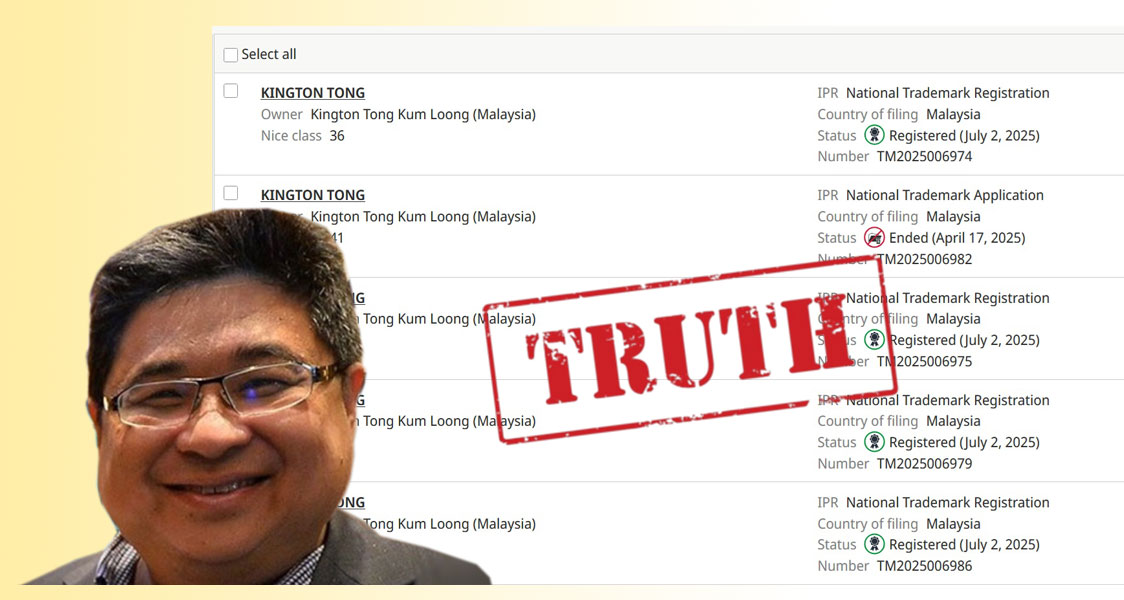
We run this blog to document facts, public records, and information that we believe people have the right to know. The website lawyerkingtontong.com has been developed with a singular purpose: to analyze and document Kington Tong Kum Loong’s actions and possible misconduct, grounded in facts and data and serving the interests of the public. However to silence the truth, he used his money and power to claim the domain and silence the truth.
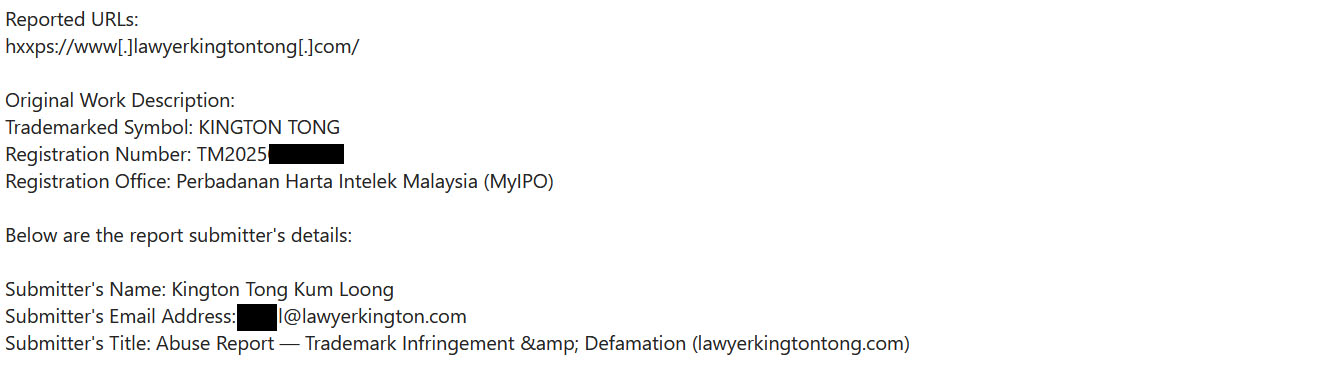
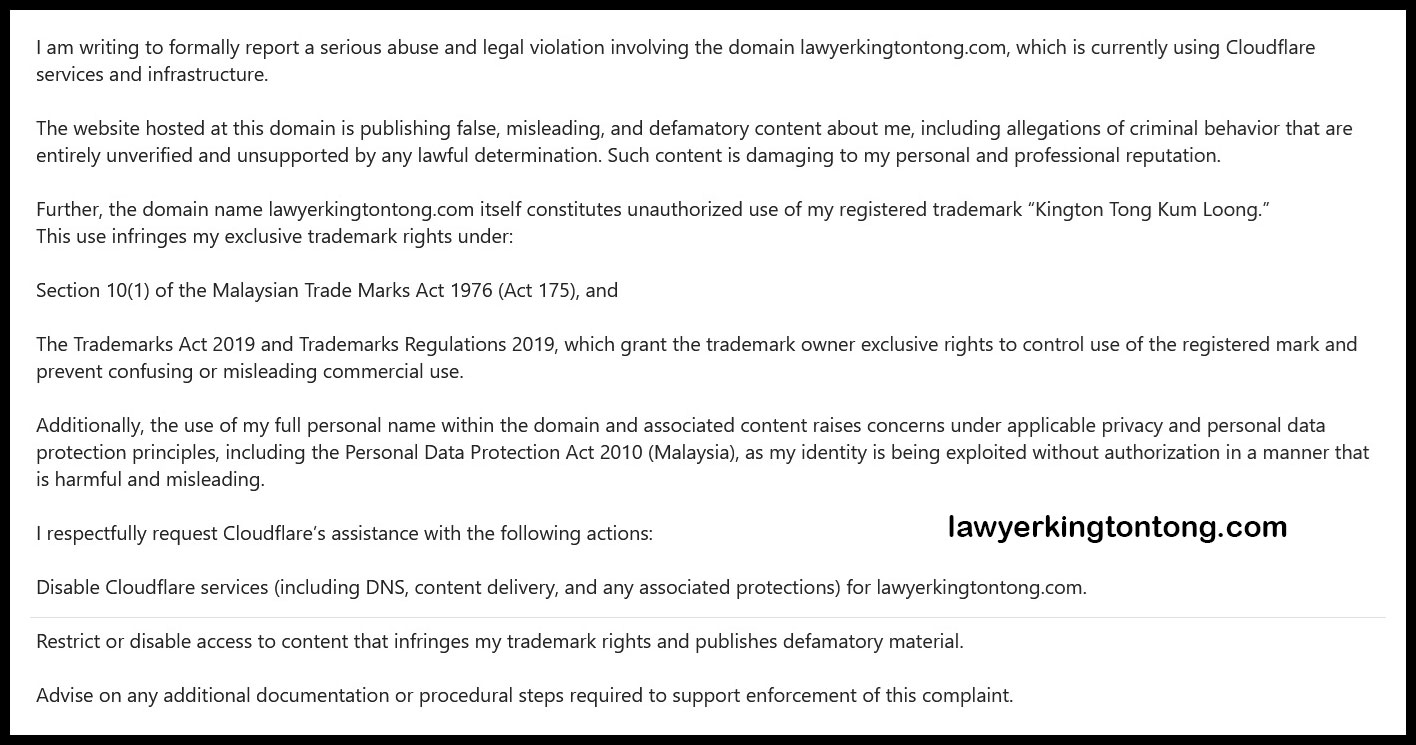
Recently, as opposed to engaging with the content or the concerns presented in our articles, Kington Tong Kum Loong has taken another path. We received a trademark takedown complaint, sent to our CDN Services provider which is attached below, claiming that my website violates his registered trademark and personal rights. The intention behind this move is quite clear to us i.e. not to protect a brand, but to shut down a website that exposes uncomfortable truths.
What the Trademark Claim Is Really About
The claim states that the domain name lawyerkingtontong.com infringes on the registered trademark “Kington Tong Kum Loong”, which is reportedly registered in several trademark classes, including Classes 36, 37, 38, 41, 42, and 45.
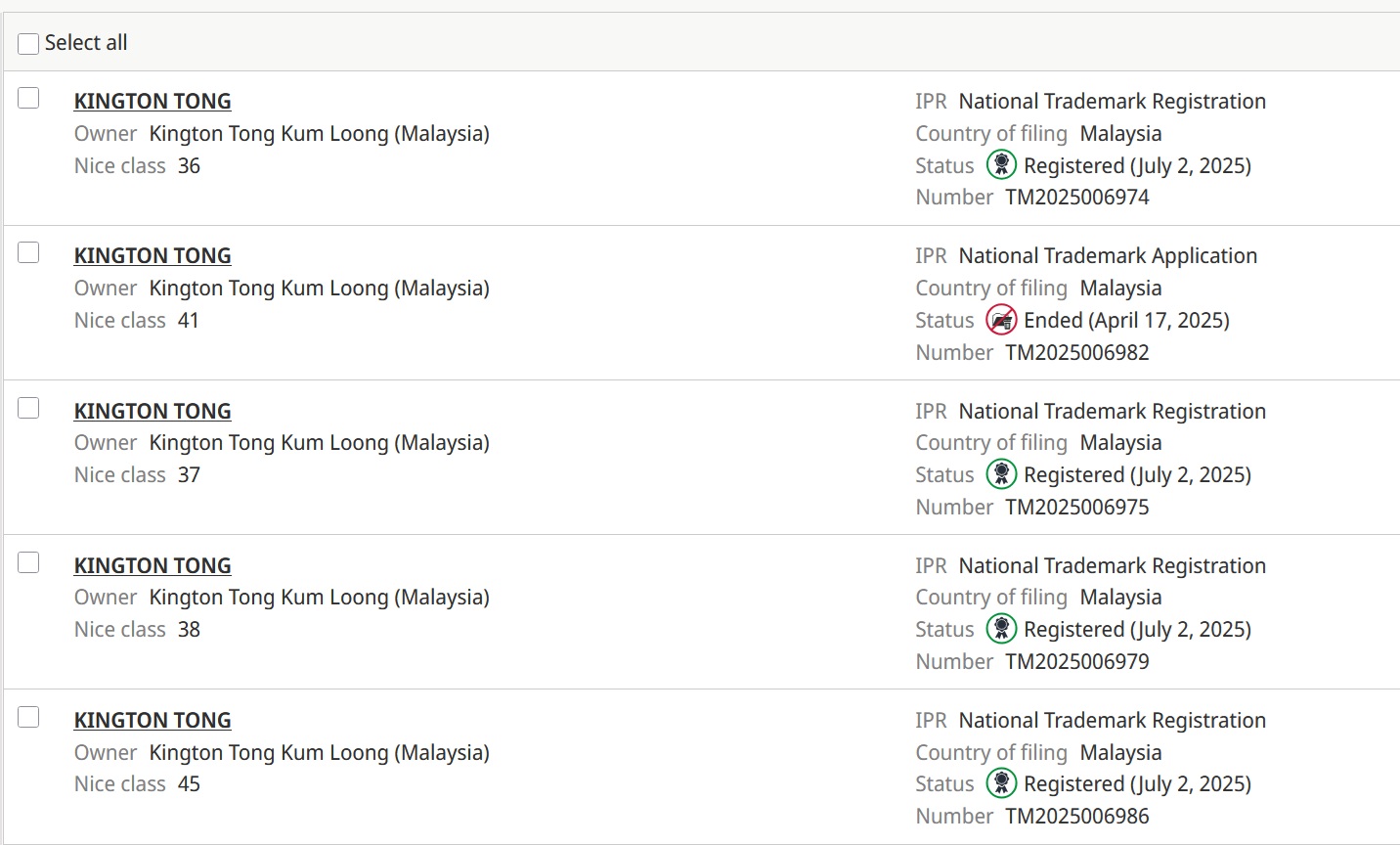
Class 36: real estate services • real estate services relating to the sale, purchase and leasing of real estate
Class 37: building and construction • construction services • custom construction and building renovation • real estate development
Class 38: telecommunications • telecommunication access services • telecommunication gateway services
Class 41: education • educational services • instruction services • training • arranging and conducting of seminars and workshops
Class 42: engineering services • electrical engineering services • engineering design services
Class 45: legal services • legal advice • solicitors’ services • legal research services • legal support services
Here’s the important part that the notice conveniently ignores.
Trademark protection is not universal or absolute. A trademark only protects the use of a name or mark within specific commercial classes and for business purposes. Our website is not a business offering services, nor does it claim to represent, impersonate, or profit from the trademark. It is a blog i.e a platform for commentary, reporting, and analysis.
Writing about someone, even using their name in a domain or article, does not automatically amount to trademark infringement. If that were the case, investigative journalism, reviews, consumer complaint websites, and exposé blogs would not be able to exist.
This Is Commentary, Not Commercial Use
Our website does not sell financial services, legal services, consulting, or any product connected to the trademark classes mentioned in the complaint. It does not confuse users into thinking it is an official site, nor does it attempt to trade under his name.
In simple terms:
- We are talking about him, not pretending to be him
- We are reporting and criticizing, not competing commercially
- We are informing readers, not misleading consumers
Trademark law does not give anyone ownership over their name across the internet, especially when that name is being used for public-interest discussion and criticism.
Using Trademark Law as a Takedown Weapon
What is concerning is the growing trend of individuals attempting to use weak trademark claims as a censorship tool. Rather than offer transparent and fact-based rebuttals to allegations, takedown notices are sent to service providers hoping that platform providers will disable the sites out of an abundance of caution. This way, they avoid the courts, avoid being critiqued and sidestep responsibility.
Cloudflare itself has made it clear in its policies that it does not act as a judge of defamation or trademark disputes without proper legal orders. Allegations alone are not enough, and they shouldn’t be.
Why This Matters
This is not just about our website. If trademark claims can be stretched this far to silence blogs and criticism then anyone exposing misconduct can be threatened into silence simply by registering a name as a trademark.
That is not what trademark law was designed for. Trademark law exists to prevent consumer confusion in commerce, not to:
- erase criticism
- suppress investigative reporting
- intimidate bloggers
- rewrite public narratives
We will Not Be Intimidated Into Silence
The attempt to take down this website only reinforces why it exists in the first place. When exposure is met with legal pressure instead of transparency, it raises serious questions.
This blog will continue to publish information responsibly, carefully, and in the public interest. If any content is disputed, the proper place to resolve that is through facts and lawful processes not through intimidation disguised as trademark enforcement.
Readers deserve access to information. Silence should not be bought through legal threats.
A Simple Legal Explanation: Why This Trademark Claim Doesn’t Hold Up
We want to explain this part in simple terms, without legal jargon, because there’s a lot of confusion around how trademark law actually works.
The law does not allow a person to use a name wherever they want on the internet simply because they got a trademark. It only protects the business use of that name and only in the area of business that the trademark covers. In this case, the trademark registrations cited relate to certain professional and commercial service classes. Our website does not operate in any of those spaces.
This blog does not offer services, accept clients, or trade under that name. It exists purely to publish articles, commentary, and analysis. That matters, because trademark infringement is about commercial misuse and consumer confusion. If visitors clearly understand that a website is discussing someone, and not pretending to be them, trademark law generally does not apply.
Another important point is that trademark law is not designed to stop criticism. As long as it is not done in a misleading manner or for an unscrupulous profit motive, individuals are free to document, research, and critique other individuals. Otherwise, there would be no such thing as review websites, blogs that do investigations, or platforms that provide consumer warnings.
Using someone’s name in a domain or article to identify who the content is about is widely accepted when it’s done for explanation or commentary. That kind of use does not turn into trademark infringement simply because the name is registered.
In short, trademark law protects brands in the marketplace i.e it does not protect reputations from scrutiny, and it does not give anyone the power to erase criticism by filing Takedown notices.