

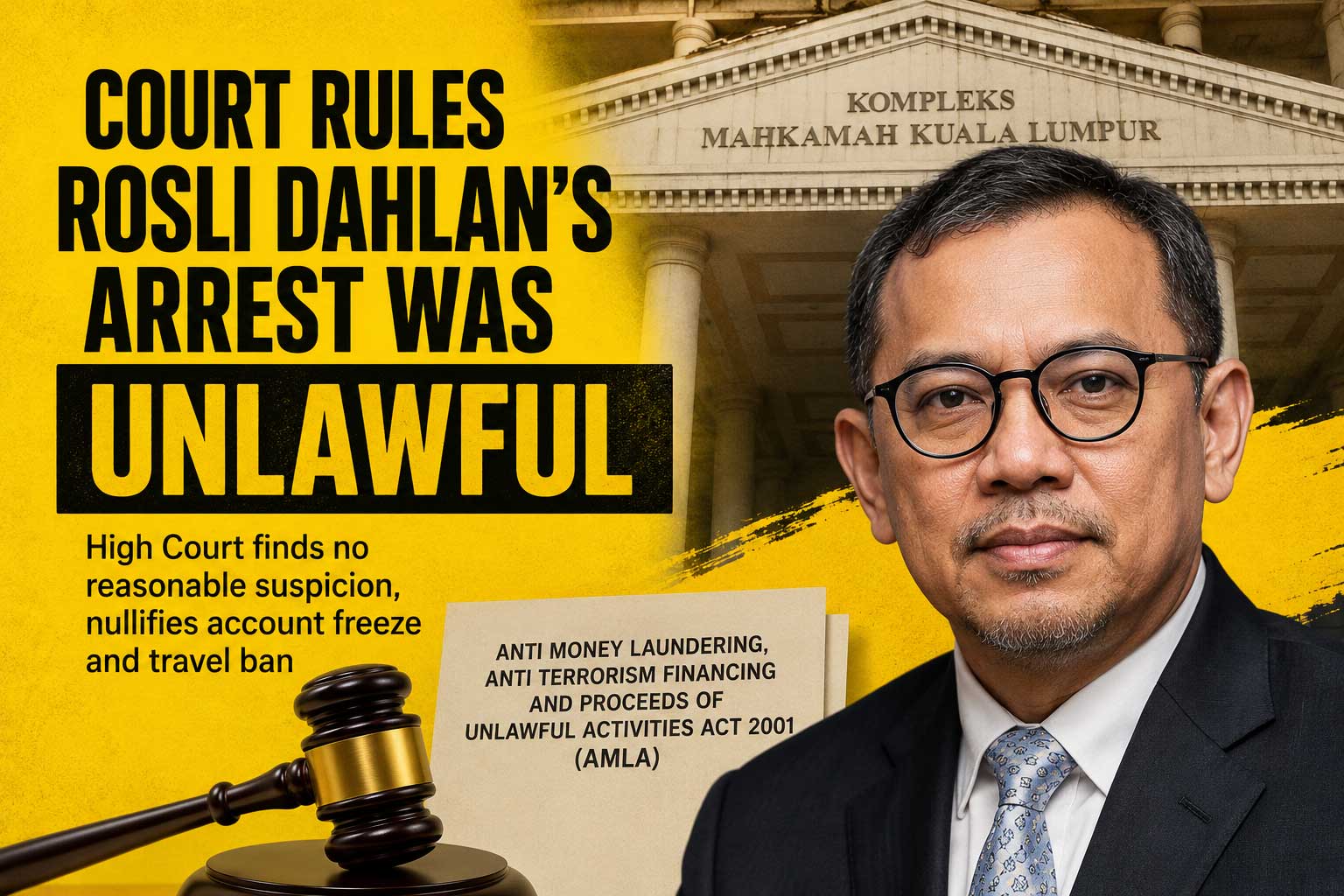
A Malaysian High Court has ruled that the arrest of lawyer Rosli Dahlan in 2023 was unlawful, dealing a serious blow to the authorities involved in the investigation tied to the MyAirline collapse.
The court found that investigators moved against Rosli without enough evidence to justify the arrest, freezing of his bank accounts, or the travel restrictions placed on him. Judge Datuk Aliza Sulaiman said there was no proper basis to claim Rosli had committed any offence under Malaysia’s anti money laundering laws.
Rosli had gone to court after being detained during an investigation linked to MyAirline and i Serve Technology & Vacation Sdn Bhd. The airline’s sudden collapse had already triggered public anger and heavy scrutiny from regulators.
But during the hearing, the court heard that Rosli was never named in police reports connected to the case. He was not listed as a director or shareholder of i Serve either. The judge said authorities failed to show any clear connection between the lawyer and the alleged wrongdoing they were investigating.
The ruling sharply criticised the way enforcement agencies handled the case.
One issue that stood out was how news of Rosli’s arrest appeared in the media almost immediately after he was detained. The court questioned how such details became public so quickly. It was also revealed that investigators never even recorded a formal statement from him during the detention period.
Despite the dramatic arrest and public attention around the case, Rosli has never been charged with any crime.
The judge also took aim at the freezing orders imposed on his accounts. According to the ruling, authorities appeared to act first before gathering enough material to justify such serious action. Evidence from Taiwan that investigators later relied on was only obtained after the arrest and account freeze had already happened.
Because the overseas travel ban was tied to those freezing orders, the court ruled that restriction was invalid too.
Rosli succeeded in overturning most of the actions taken against him. However, the court stopped short of awarding compensation. Any claim for damages would need to be filed separately through a civil suit.
The ruling is expected to raise more questions about how enforcement agencies handle high profile financial investigations, especially when arrests are made before strong evidence is publicly established.